


Hearing the words “collapsed sewer pipe” can make any homeowner’s stomach drop. It sounds final, expensive, and like your yard is about to be torn apart. Around Seattle, we see this concern a lot, especially in older neighborhoods where sewer lines have been underground for decades, quietly aging out of sight.
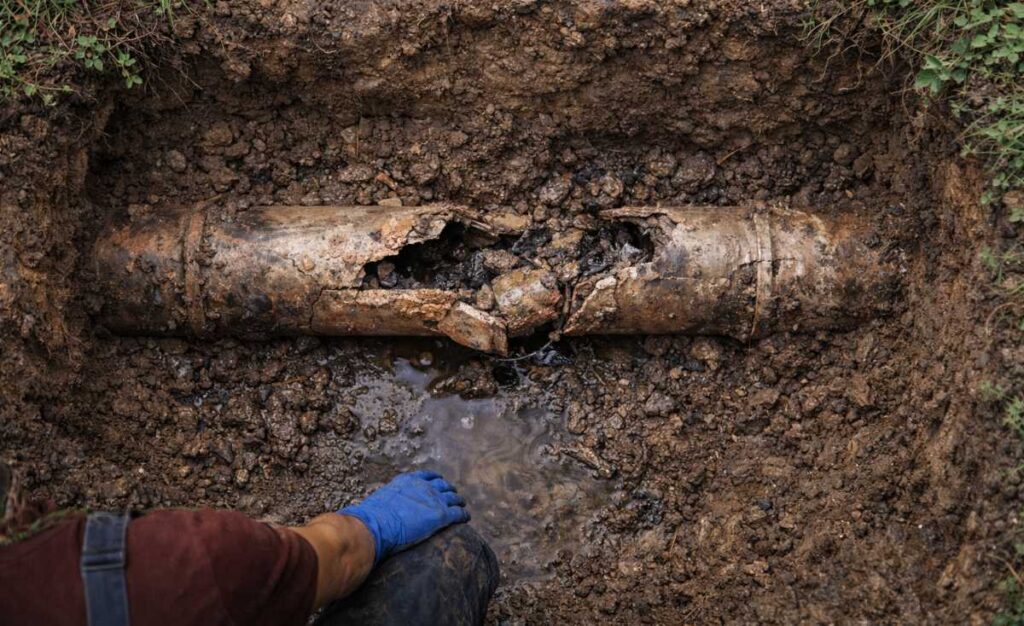
Trenchless sewer repair often comes up as a possible solution, and for good reason. It has saved countless lawns, driveways, and patios over the years. But can trenchless methods really fix a collapsed pipe, or is that wishful thinking? The honest answer is, sometimes yes, sometimes no. It depends on the type of collapse, the pipe condition, and what is happening underground. Let’s break it down in plain language.
For trusted trenchless sewer repair and other top-tier plumbing services in Seattle and the surrounding cities, look no further than Gene Johnson Plumbing, Heating, Cooling & Electrical. Call us today at 206.792.7495 or contact us online to schedule your next service.
What Counts as a “Collapsed” Sewer Pipe?
When most people picture a collapsed sewer pipe, they imagine a pipe completely flattened and unusable. In reality, collapse exists on a spectrum. Some pipes are partially collapsed, meaning they have cracked, shifted, or caved in just enough to restrict flow. Others are fully collapsed, with soil filling the pipe and blocking it entirely.
In the Greater Seattle area, older pipe materials are often the root of the problem. Clay pipes can crack and cave under pressure. Cast iron corrodes from the inside until it loses strength. Orangeburg pipes, which were popular mid-century, soften and deform over time.
The level of damage matters because trenchless sewer repair relies on having at least some usable pipe pathway. If the pipe is still mostly intact, trenchless options may be on the table. If the pipe has completely fallen apart, traditional excavation may be unavoidable.
How Trenchless Sewer Repair Works in the First Place
Trenchless sewer repair is a broad term that covers a few different methods, but the goal is always the same, fix or replace a sewer line with minimal digging. The two most common approaches are pipe lining and pipe bursting.
Pipe lining creates a new pipe inside the old one using a resin-coated liner that hardens in place. Pipe bursting breaks apart the old pipe while pulling a new one through the same path. Both methods dramatically reduce surface disruption compared to full excavation.
Before either method is considered, a drain camera inspection is essential. We need to see the condition of the pipe, identify where the damage is, and determine whether the pipe still has enough structure to support a trenchless repair.
Trenchless repairs are not shortcuts. When done properly, they produce long-lasting results. The question is whether the collapsed section meets the criteria for these methods to work safely and effectively.
When Trenchless Sewer Repair Can Fix a Collapsed Pipe
Yes, trenchless sewer repair can fix some collapsed pipes, especially partial collapses. If the pipe has cracked inward, shifted slightly, or developed a localized failure but still maintains a continuous path, trenchless solutions may be ideal.
Pipe bursting is often the hero in these situations. It is designed specifically to handle damaged or collapsed sections by fracturing the old pipe outward and replacing it with a new, durable pipe.
Trenchless repair is more likely to work when:
- The collapse is partial: The pipe has deformities or cracks but is not completely crushed.
- The pipe path is still navigable: A camera can pass through, even with resistance.
- The surrounding soil is stable: Excessive voids or sinkholes complicate trenchless work.
- The damage is localized: One or two sections are compromised, not the entire run.
In these cases, trenchless repair can restore full function without turning your yard into a construction zone.
When Trenchless Sewer Repair Is Not the Right Solution
There are times when trenchless repair simply is not possible, and it is important to be upfront about that. A fully collapsed pipe that has lost its shape and is filled with soil leaves no path for liners or bursting tools to follow safely.
Severe collapses can also create voids in the surrounding soil. That instability increases the risk of trenchless equipment shifting or failing, which can cause more damage.
Situations where trenchless repair is usually not recommended include:
- Complete pipe collapse: The pipe has flattened or disintegrated entirely.
- Large soil voids: The ground around the pipe has washed away significantly.
- Multiple severe failures: Long stretches of pipe are compromised beyond repair.
In these scenarios, traditional excavation may be the safest and most reliable option. While that is not what homeowners hope to hear, it prevents repeat failures and ensures long-term stability.
Pipe Lining vs Pipe Bursting for Collapsed Pipes
Understanding the difference between trenchless methods helps clarify what might work for your situation.
Pipe Lining and Collapses
Pipe lining works best when the existing pipe still has structural integrity. The liner needs a continuous shape to press against while it cures. Minor deformation, cracks, and corrosion are usually fine. Severe collapses are not.
Pipe lining is ideal for:
- Small cracks and fractures
- Root intrusion damage
- Aging but mostly intact pipes
Pipe Bursting and Collapses
Pipe bursting is more aggressive and better suited for collapse scenarios. It replaces the old pipe entirely by breaking it outward and pulling a new pipe through.
Pipe bursting is often used when:
- Pipes have partially collapsed
- Old materials need full replacement
- Upsizing the pipe diameter is desired
Each method has its place, and choosing the right one depends on what the camera inspection reveals.
Why Drain Camera Scoping Is Non-Negotiable
No reputable plumber should recommend trenchless repair for a collapsed pipe without a camera inspection. Seeing the pipe is the only way to make an informed decision.
Drain camera scoping allows us to:
- Confirm the extent of the collapse: Partial vs full collapse matters.
- Locate the damage precisely: Depth and distance guide repair planning.
- Assess pipe material: Different materials respond differently to trenchless methods.
- Evaluate soil intrusion: Soil inside the pipe often signals more severe failure.
This inspection protects you from unnecessary work and ensures that whatever repair is chosen actually solves the problem, not just delays it.
Cost Considerations for Trenchless vs Traditional Repairs
Cost is always part of the conversation. Trenchless sewer repair often costs less than traditional excavation when you factor in landscaping, concrete, and surface restoration. However, trenchless is not always cheaper upfront.
Factors that influence cost include:
- Length of the sewer line
- Depth of the pipe
- Severity of the collapse
- Chosen repair method
While trenchless methods can save money overall, the priority should always be choosing the repair that will last. A cheaper fix that fails again in a few years ends up costing more in the long run.
Seattle-Area Soil and Tree Roots Play a Big Role
In Seattle and surrounding communities, wet soil conditions and mature trees are constant stressors on sewer lines. Even a repaired or replaced pipe needs to account for these environmental factors.
Modern trenchless materials are designed to resist root intrusion and corrosion, making them well suited for this region. That is one reason trenchless repair is often recommended when conditions allow.
However, if the collapse has already caused significant soil movement or root damage, excavation may still be necessary to stabilize the area before installing new piping.
Making the Right Call for Your Home
The biggest takeaway is that trenchless sewer repair is not a blanket solution, but it is a powerful one when used appropriately. Partial collapses, cracked pipes, and failing materials can often be handled without major digging. Full collapses may require a more traditional approach.
The key is accurate diagnosis and honest recommendations. There is no one-size-fits-all answer, especially with something as important as your sewer line.
Get Dependable Trenchless Sewer Repair in Seattle, WA From Gene Johnson!
If you are dealing with sewer backups, slow drains, or signs of a collapsed pipe, guessing is not your friend. Getting eyes inside the pipe is the fastest way to understand what is really happening and what your options are.
At Gene Johnson Plumbing, Heating, Cooling & Electrical, we help homeowners across Seattle, Mukilteo, SeaTac, and nearby communities evaluate sewer line damage using advanced drain camera scoping. When trenchless sewer repair is a viable option, we explain how it works and whether it makes sense for your situation. When it is not, we walk you through reliable alternatives.
If you are worried about a collapsed sewer pipe and want straightforward answers, reach out to Gene Johnson today. We are here to help you choose the right solution and protect your home with confidence.