Professional Hydrojetting Services for Your Seattle Home
When stubborn clogs resist standard methods, hydrojetting is the most powerful and thorough drain cleaning solution available. With 50 years of experience, we bring proven expertise to every hydrojetting job, delivering long-term results that other methods simply cannot match.
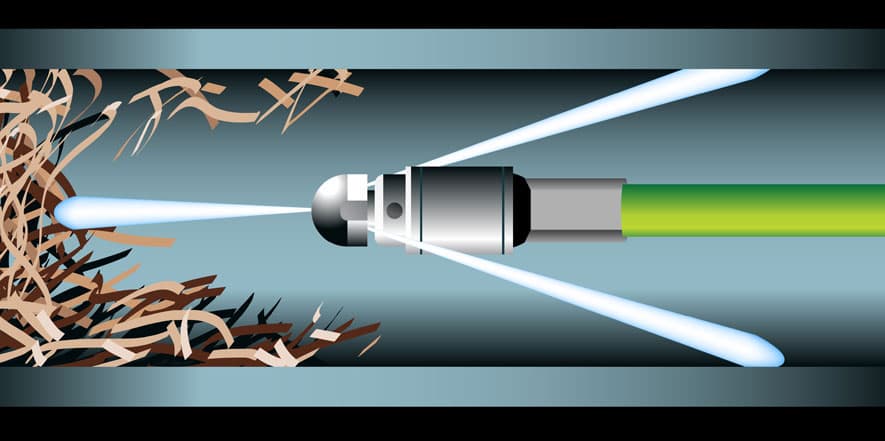
Hydrojetting uses a specialized nozzle that sprays high-pressure water at up to 4,000 psi directly into your pipes. This force strips away years of accumulated grease, sludge, soap scum, mineral scale, and even tree roots, restoring your pipes to near-original flow capacity. Unlike traditional snaking, which punches through a clog, hydrojetting cleans the entire pipe wall so blockages are less likely to return.
For homeowners across Seattle dealing with recurring drain problems, hydrojetting delivers the comprehensive cleaning that restores full pipe performance and prevents future backups.
Hydrojetting vs. Snaking: Which Method Do You Need?
Both hydrojetting and snaking are effective drain cleaning methods, but they solve different problems. Understanding the difference helps you choose the right service for your situation.
Snaking and Cabling
A steel cable breaks through or retrieves the clog. This method works best for single-fixture clogs caused by hair or small obstructions. Results typically last weeks to months depending on the cause, and it carries a lower upfront cost. Camera inspection is optional before service.
Hydrojetting
High-pressure water scours the entire pipe interior, cleaning the full pipe wall rather than just punching through blockages. Hydrojetting is best for recurring clogs, grease buildup, tree roots, and main line issues. Results last months to years with proper maintenance. While it has a higher upfront cost, fewer repeat service calls make it more economical long-term. A camera inspection is recommended beforehand to confirm pipe condition.
Not sure which method your drains need? Our plumbers will assess the situation and recommend the most effective approach. In many cases, we start with a camera inspection to see exactly what is happening inside the pipe before choosing a method.