


A sump pump is one of those things we barely think about until the exact moment we desperately need it. Usually that moment is during a classic Seattle rain stretch, when the ground is saturated, and the basement starts feeling a little too “indoors-meets-outdoors.” You glance at the sump pit, expect to hear the pump kick on, and instead you get… nothing. No hum, no vibration, no heroic water removal. Just silence and rising water.
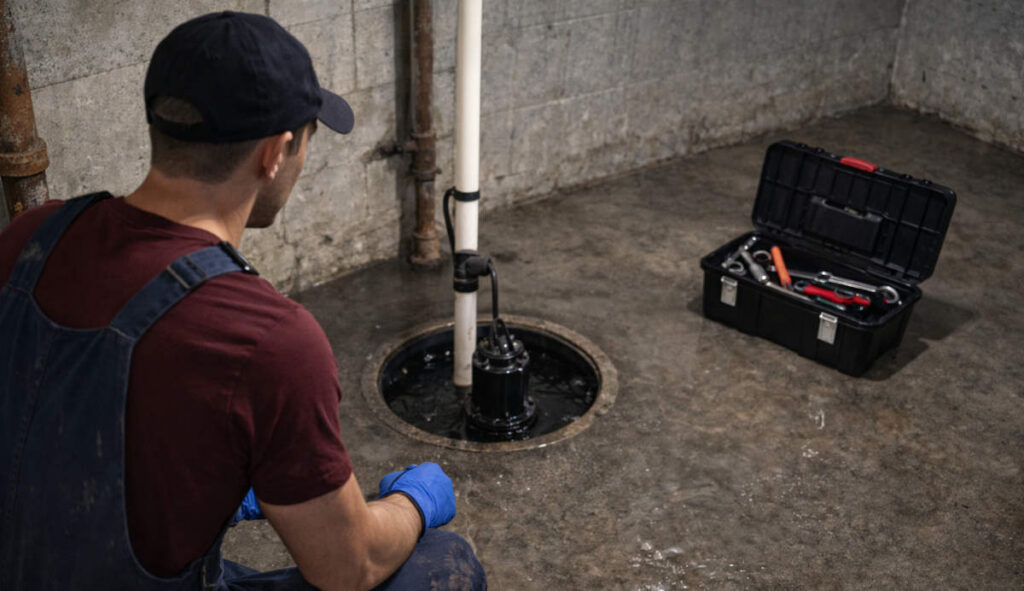
If your sump pump is not turning on, it does not always mean it is completely dead. Sometimes it is an easy power issue. Sometimes it is a float problem. And sometimes the pump has been slowly failing for a while and is finally waving the white flag. Below, we will walk through the most common reasons a sump pump stops working and what usually fixes it.
Dealing with a faulty sump pump? Reach out to Gene Johnson Plumbing, Heating, Cooling & Electrical today for trusted sump pump services in the Seattle area and nearby cities. Call us at 206.792.7495 or contact us online to get a free quote or to ask us any questions.
Start With the Simple Stuff: Power Problems and Tripped Connections
We know, it sounds obvious. But you would be surprised how often a “dead pump” is really a power issue. Sump pumps live in basements, crawlspaces, or utility rooms, aka the places where outlets get bumped, cords get tugged, and breakers get tripped during storms.
First, check whether the pump is plugged in securely. Then check the outlet. If it is a GFCI outlet (very common), it may have tripped. If the outlet is dead, check your electrical panel for a tripped breaker. Also, some sump pumps are plugged into a switch-controlled outlet (yep, we have seen it), so a flipped wall switch can shut the pump off.
Common power-related failures include:
- Tripped GFCI: Moisture or a power surge can trip the outlet, cutting power to the pump even though everything looks normal at first glance.
- Tripped breaker: Stormy weather and power fluctuations can overload circuits, especially if other appliances share the same circuit.
- Loose plug or damaged cord: A slightly pulled plug can break the connection, and a worn cord can fail intermittently before it quits entirely.
- Faulty outlet: Outlets can wear out, and sump pumps draw enough current that weak connections show up as “randomly not working.”
If power is the issue, fixing it quickly can save you from a much bigger mess.
The Float Switch Is Stuck, Tangled, or Simply Worn Out
If the pump has power but still will not turn on, the float switch is the next suspect. The float is the little device that rises with the water level and tells the pump, “Hey, we have got work to do.” When it is stuck, it cannot trigger the pump.
Floats get stuck for a few reasons. Debris can block it. The pump can shift in the pit and pin the float against the side. The float cord can tangle. Or the float mechanism can simply wear out after years of cycling on and off.
Float switch issues we see a lot:
- Float wedged against the pit wall: The pump tilts slightly over time, and the float cannot rise freely, so the pump never gets the “on” signal.
- Tangled float cord: A cord can wrap around the discharge pipe or the pump body, locking the float in place.
- Debris in the pit: Small rocks, sludge, or even a lost toy can jam the float and stop it from moving properly.
- Worn switch contacts: The float still moves, but the internal electrical contacts fail, which is especially common in older pumps.
If you can safely access the pit, gently lift the float (or simulate a high-water level) and see if the pump responds. If it does not, the switch or pump motor may be the issue.
The Pump Is Clogged With Mud, Silt, or “Basement Soup”
Seattle basements do not always stay pristine, and sump pits definitely do not. Over time, silt, sand, and sludge build up in the bottom of the pit. That material can clog the pump’s intake screen or jam the impeller (the internal fan-like part that moves water).
When the impeller cannot spin freely, the pump may not start at all. Or it might start and then shut off quickly. In some cases, you will hear a quiet hum, which is the motor trying, but not succeeding, to move the impeller.
Here are signs your pump may be clogged:
- Thick sludge in the pit: If the water looks like muddy soup, the pump is likely pulling in grit that wears it down fast.
- Pump hums but does not pump: The motor is getting power, but the impeller is jammed or blocked.
- Slow pumping or weak discharge: A partially clogged intake can make the pump run longer and overheat.
- Frequent cycling: A struggling pump may turn on and off repeatedly because it cannot move water efficiently.
Cleaning the pit and pump intake can help, but if the pump has been grinding grit for years, internal wear may already be done.
A Failed Check Valve Can Make It Seem Like the Pump Is Not Working
Sometimes the pump actually turns on, but you still get flooding or constant water in the pit. In that case, the problem might be the check valve. This valve is installed on the discharge pipe and keeps pumped water from flowing right back into the pit when the pump shuts off.
If the check valve fails or is installed incorrectly, water can drain back down and refill the pit quickly. That can lead to constant cycling, which burns out the pump faster, or it can create the impression that the pump is doing nothing because the water level never stays down for long.
Common check valve problems include:
- Stuck open: Water flows back into the pit, so the pump repeats the same work over and over.
- Stuck closed: The pump turns on but cannot push water out, which can overload the motor and cause failure.
- Incorrect orientation: If installed backward, the valve blocks flow entirely, and the pump cannot discharge water.
A check valve is a small part, but it can create big symptoms. If your pump is cycling like crazy or not reducing the water level, this is worth checking.
The Discharge Line Is Frozen, Blocked, or Too Restricted
In the Seattle area, we do not deal with deep freezes all winter, but we do get cold snaps that can freeze exposed discharge lines. If the discharge pipe is blocked by ice or debris, the pump may fail to turn on (or it may turn on and quickly overheat because it cannot move water).
Blockages can also come from improper discharge setups, like too many bends, undersized piping, or a line that dumps too close to the foundation and causes recycled water to flow right back into the pit.
Discharge line issues that cause dead pump symptoms:
- Frozen discharge line: Cold weather can freeze outdoor pipe sections, preventing water from exiting and causing pump strain or shutdown.
- Blocked pipe: Dirt, leaves, or a crushed pipe section can restrict flow, making the pump work harder and fail sooner.
- Improper routing: If water drains near the home, it can cycle back toward the foundation and overwhelm the system.
- Undersized pipe: Too-small discharge piping increases back pressure, which shortens pump life and reduces performance.
If discharge issues are recurring, the fix is often in the piping, not the pump.
The Pump Has Reached the End of Its Lifespan
This is the one nobody wants, but it happens. Sump pumps are not built to last forever. Even good pumps eventually wear out, especially if they run often or operate in gritty water. Motors fail, seals leak, and internal parts wear down from years of cycling.
A pump that has been working “kind of fine” might show subtle signs before it dies, like louder operation, longer run times, or occasional failure to start. Then one day, it just does not turn on at all.
Signs your pump may be failing due to age:
- It is more than 7 to 10 years old (common lifespan range, depending on use)
- It runs loudly or vibrates excessively
- It cycles frequently even in mild weather
- It struggles to keep up during heavy rain
At that point, replacement is often smarter than repeated repairs, especially when the cost of a flooded basement is on the line.
Backup Power and Battery Systems Matter More Than People Think
A sump pump that relies only on house power is vulnerable during storms, and storms are when you need it most. Power outages, brownouts, and tripped breakers can all leave your pump silent while water keeps rising.
This is why many homeowners choose a battery backup sump pump system. It is not about being fancy, it is about having a Plan B when the power flickers or drops. Some systems also include alarms, so you get a warning before water turns into a disaster.
Benefits of backup systems include:
- Continued pumping during outages
- Reduced flood risk during severe storms
- Alerts for high water levels or pump failure
- Added peace of mind when you are away from home
If your pump failed during a storm, that is a strong hint that backup protection should be part of the conversation going forward.
Get Professional Sump Pump Repair in Seattle, WA From Gene Johnson
When a sump pump will not turn on, time matters. Water can rise quickly, and damage can happen fast, especially in a finished basement or storage area. The good news is that most sump pump failures have clear causes, and once we find the real one, we can fix it the right way.
At Gene Johnson Plumbing, Heating, Cooling & Electrical, we help homeowners across Seattle, Mukilteo, SeaTac, and nearby communities diagnose sump pump issues, repair what is repairable, and replace failing pumps before they become a full-blown flood event. We also handle related plumbing work, including discharge line fixes, leak detection, and drainage solutions.
If your sump pump is silent when it should be working, reach out to Gene Johnson for same-day plumbing service. We will help you get the system back on its feet, and keep your home dry when the next round of rain rolls in.